


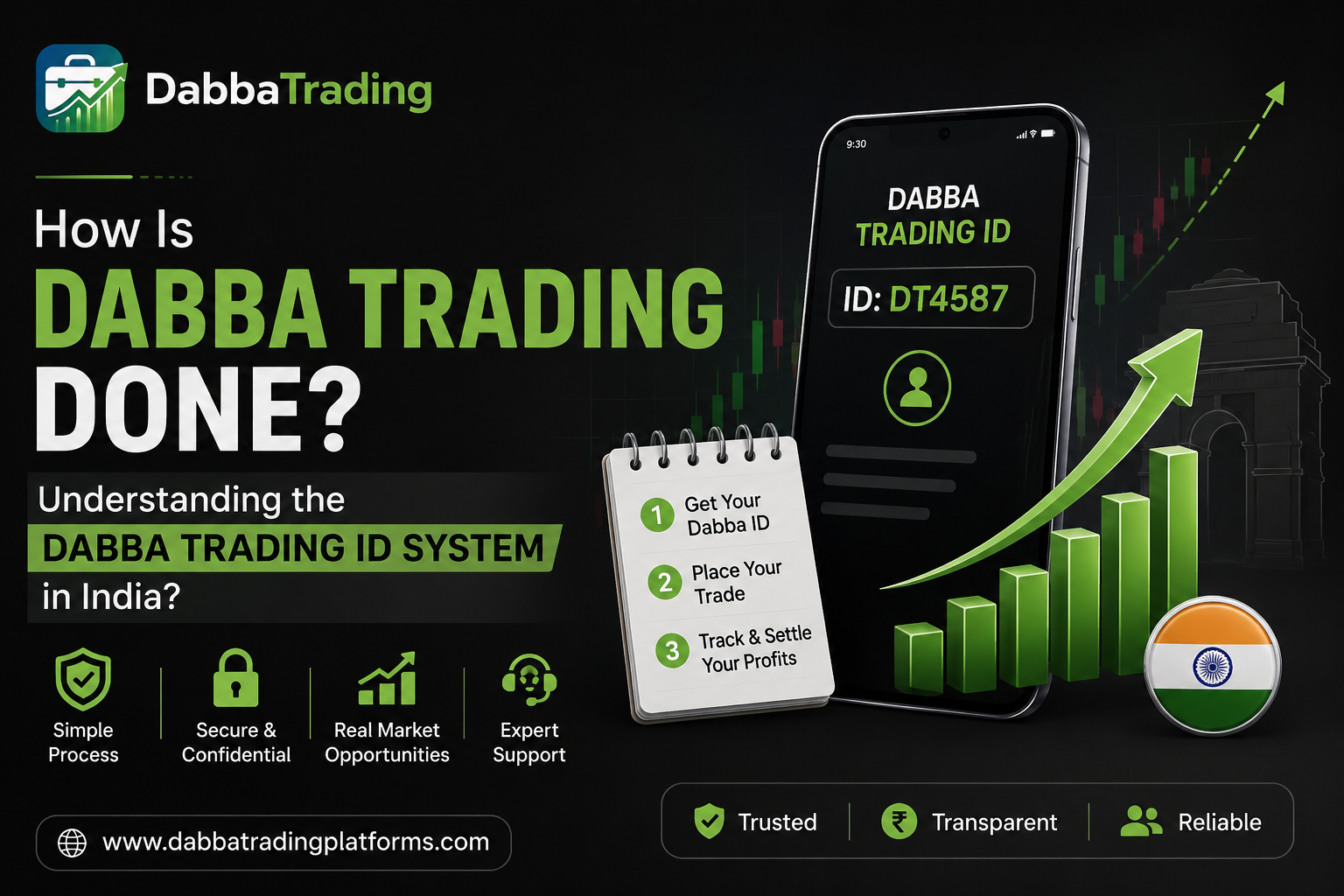

The concept of dabba trading is something that has become very popular among many individuals who are interested in trading in the Indian stock markets. In addition, the search for dabba trading ID is also very common among many users. However, it is essential to note that dabba trading has various risks attached to it.
While normal stock market transactions are carried out in a recognized exchange platform, dabba trading does not take place in any such recognized platform. As per the SEBI, dabba trading is an illegal and unregulated form of securities trading where no transaction is carried out in a recognized stock exchange.
What Is Dabba Trading?
Dabba trading is an unofficial form of trading where an operator records a customer’s buy or sell position internally instead of routing the transaction through a recognized stock exchange.
An example of such a case is when the individual thinks that he is trading stocks or an index via a private operator. In the actual sense, what happens is that the operator enters the position on his own accounting system and calculates profit or loss depending on how the price moves.
This is crucial because the individual is denied the protection accorded to exchange-trading.
What Is a DABBA TRADING ID?
A DABBA TRADING ID generally refers to an account or identification created by an unregulated operator for tracking a customer’s positions, deposits, transactions or account balance.
Although there is some flexibility with the structure for operators, a DABBA TRADING ID lacks the protection of being associated with a broker that is registered under SEBI.
In fact, SEBI explicitly states to investors that settlements related to dabba trading occur within the operators themselves, which is outside the purview of stock exchanges and other regulatory agencies.
How Dabba Trading Is Done?
The basic mechanism can be understood in several stages:
1. Customer Contacts an Operator
A prospective customer may find an unregistered operator through social media, messaging platforms, websites or personal referrals.
2. An Internal ID Is Created
The operator may provide an account or DABBA TRADING ID through which the customer’s positions and balances are tracked.
3. Trading Instructions Are Given
The customer communicates a buy or sell instruction for a stock, index, commodity or other market instrument.
4. The Trade Is Recorded Internally
Instead of sending the order to a recognized stock exchange through a registered intermediary, the operator records the transaction in an internal system.
5. Profit or Loss Is Calculated
The operator may calculate the customer’s result according to the difference between the opening and closing market prices. The settlement takes place privately between the operator and customer.
This is fundamentally different from regulated exchange trading, where orders are processed through authorized market infrastructure.
Why Is Dabba Trading Risky?
The biggest problem with dabba trading is the absence of normal investor protections.
SEBI states that investors participating in dabba trading cannot use the grievance-redressal mechanisms available through recognized stock exchanges.
Major risks include:
- No recognized exchange execution
- No normal exchange investor protection
- Limited or unavailable dispute-resolution mechanisms
- Counterparty and settlement risk
- Potential loss of deposited funds
- Risk of dealing with anonymous or unregistered operators
- Potential legal consequences because the activity is prohibited
NSE also advises investors that organizing, assisting with or participating in dabba trading is illegal and recommends dealing only with SEBI-registered intermediaries.
Is DABBA TRADING ID Legal in India?
A DABBA TRADING ID should not be treated as equivalent to a legitimate trading account with a SEBI-registered broker.
SEBI clearly describes dabba trading as illegal and advises investors not to participate in it. NSE has similarly cautioned investors against platforms and individuals offering dabba trading services.
Therefore, people searching for a DABBA TRADING ID should first verify whether the intermediary is properly registered and whether transactions are executed through recognized market infrastructure.
How to Trade More Safely in India
Stock Trading investors must employ regulated methods to invest. Before creating their account, they should make sure that the intermediary is registered and know about brokerage, fees, risks, and relevant terms.
Investors must also keep in mind the SEBI guidance for investors, which says that they should not engage in any transaction with an unregistered broker or intermediary.
Investors should also refer to SEBI and NSE for educational purposes instead of depending on unsolicited trading tips or guaranteed returns.
Key Takeaways
- DABBA TRADING ID generally refers to an internal account used by an unregulated operator.
- Dabba trading happens outside recognized stock exchanges.
- SEBI classifies dabba trading as illegal and unregulated.
- Investors do not receive normal exchange-based investor protection for dabba transactions.
- Always verify an intermediary’s regulatory status before investing.
- Legitimate stock-market trading should be conducted through authorized and regulated channels.
Final Thoughts
Knowledge about the process of dabba trading is critical to understand its risks, rather than joining into the process itself. A DABBA TRADING ID looks like any other trading ID; however, the regulatory aspect of dabba trading is entirely different.
For Indian traders, making well-informed decisions involves verification and transparency. Prior to making payments or heeding any investment advice, confirm the legitimacy of the intermediary and refer to reliable sources of investor education.
For more educational information about trading terminology, market risks and responsible investing in India, visit Dabba Trading Platforms and make informed decisions based on verified information.
Frequently Asked Questions
What is a DABBA TRADING ID?
A DABBA TRADING ID is an account identifier used by some unregulated dabba operators to record customer positions and balances. It is not equivalent to an account maintained with a regulated stockbroker.
Is dabba trading legal in India?
No. SEBI identifies dabba trading as an illegal and unregulated form of securities trading.
Are dabba trades executed on NSE or BSE?
No1. Dabba transactions are conducted outside the recognized stock-exchange mechanism and are generally settled internally by the operator.
Can investors complain to a stock exchange about dabba trading?
The normal exchange grievance-redressal and dispute-resolution mechanisms are not available for prohibited dabba transactions.
What should I check before opening a trading account?
Verify that the intermediary is properly registered and use official regulatory resources to conduct due diligence. Avoid operators promising guaranteed profits or asking you to trade outside recognized exchanges.