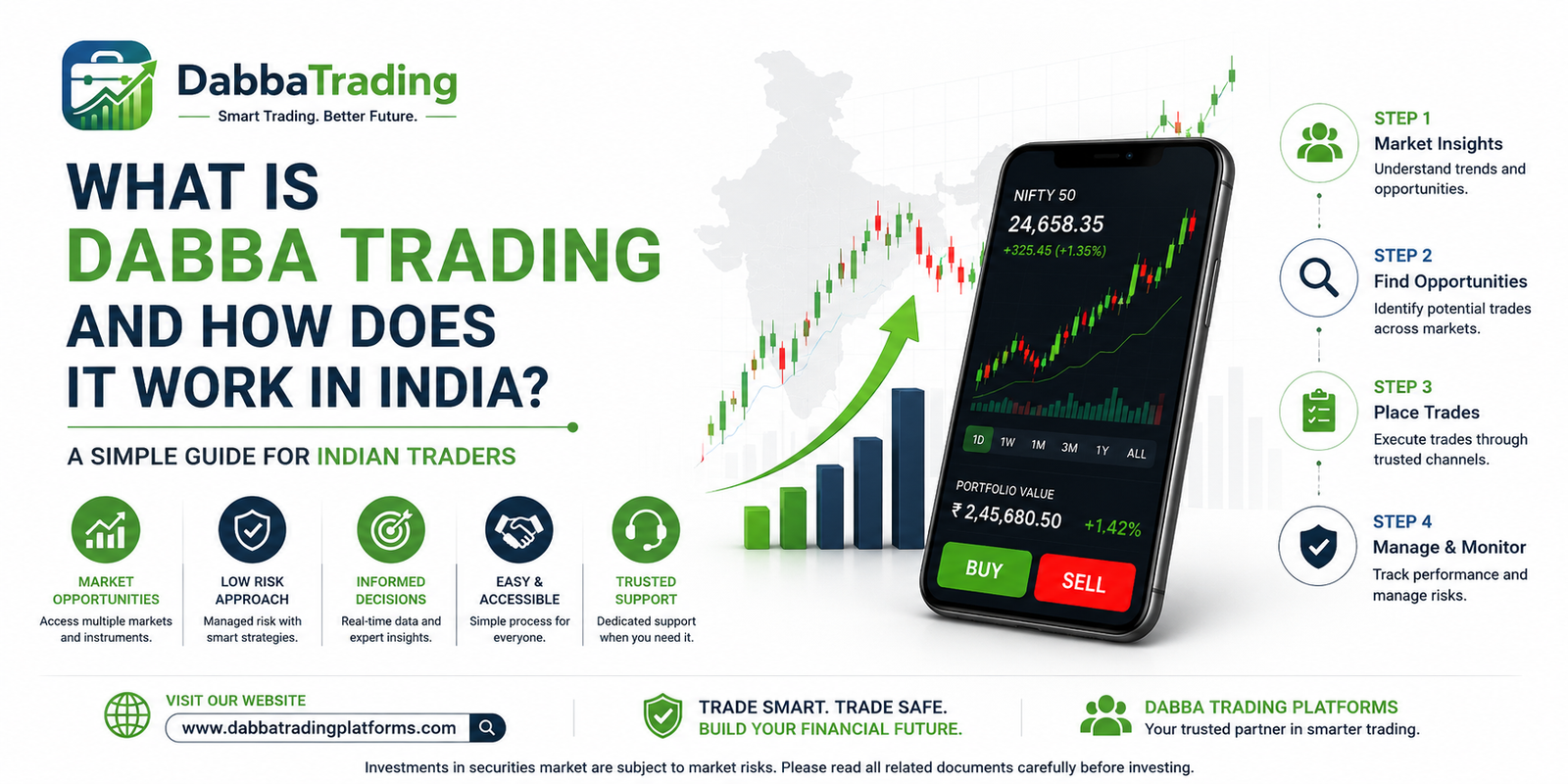


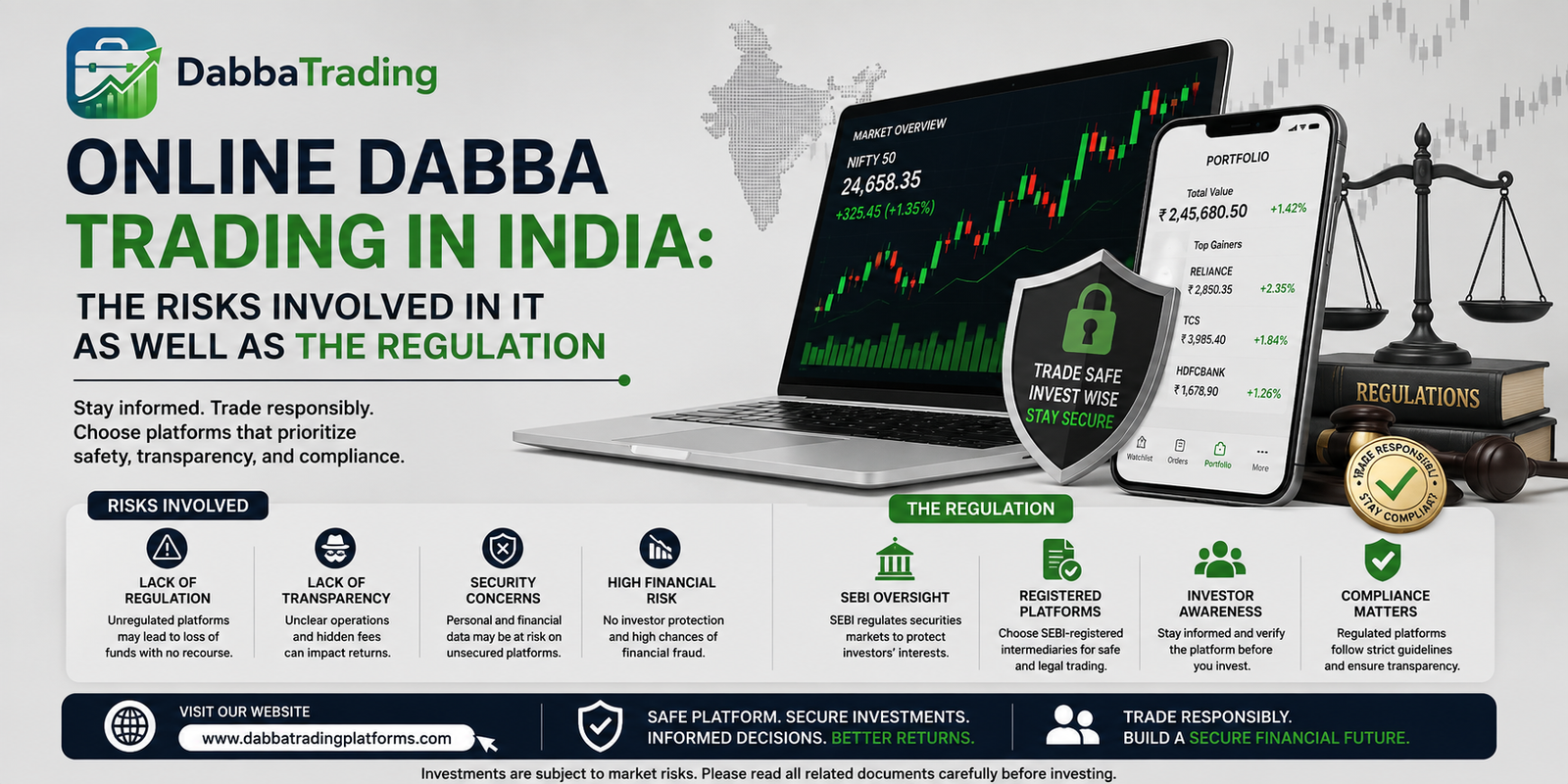

The rise in digitalization has made Online Dabba Trading in India a popular search term for those looking to capitalize on stock market trading opportunities. Nevertheless, it would be imperative for investors to know the difference between online trading and dabba trading. In dabba trading, the transactions are not carried out through a recognized stock exchange and are thus unregulated.
According to the Securities and Exchange Board of India (SEBI), dabba trading is an illegal and unregulated securities trading process. Those who use this method will not have access to any protections or grievance redressals which are available through recognized stock exchanges.
In case you are planning to do Online Trading, you should consider legality, registration of brokers, security of accounts, transaction records, and protection of investors first.
What is Online Dabba Trading in India?
Featured snippet answer:
Online dabba trading is an illegal practice wherein the trades pertaining to any financial security is done outside the official system of stock exchanges.
In a standard dabba trading structure, one can take orders to buy and sell and keep their own accounting system for profits and losses. However, the transaction does not have to be done at a recognized stock exchange. According to SEBI, such trading is outside the purview of the exchange-based regulation and protection systems.
The reason why this is relevant is because a website, app, social media handle, or even interface does not constitute legitimacy in the trading process.
Why Is Dabba Trading Risky?
Dabba trading can expose participants to several significant risks, including:
- Lack of recognized exchange protection
- Limited or unavailable grievance-redressal mechanisms
- Counterparty and settlement risks
- Potential financial fraud
- Unauthorized use of personal or financial information
- Misleading claims about guaranteed or unusually high returns
- Difficulty verifying transaction records
NSE also warns investors about unauthorized trading applications, unregulated platforms, guaranteed-return schemes, and illegal dabba trading services.
Online Trading vs. Dabba Trading
Understanding the difference between regulated Online Trading and dabba trading can help investors make better decisions.
Regulated Online Trading
Regulated online trading generally involves:
- A trading account with an authorized intermediary
- Appropriate KYC procedures
- Transactions routed through recognized market infrastructure
- Documented trades and account statements
- Applicable regulatory oversight
- Investor grievance mechanisms
- Greater transparency around charges and transactions
Investors need to check whether the intermediary is registered before opening an account or making any transfer.
Dabba Trading
Dabba trading operates outside recognized exchange mechanisms. According to SEBI, investors involved in such activity cannot rely on the normal grievance-redressal mechanisms available for trades conducted through recognized exchanges.
Key distinction: A professional-looking website or mobile application is not proof that a trading service is regulated.
How to Identify an Unregulated Trading Platform
Before using any online trading service in India, investors should perform basic due diligence.
1. Verify Registration
Check whether the intermediary is registered with SEBI and whether its claimed credentials can be independently verified.
2. Be Careful With Guaranteed Returns
Promises of guaranteed, fixed, or unusually high returns should be treated as major warning signs. NSE advises investors not to trust assurances of guaranteed returns in securities markets.
3. Avoid Unofficial Account Handling
Investors need to be careful when anyone demands trading passwords, OTPs, or full access to the accounts. It is recommended by SEBI to take special care of the trading and investment account credentials.
4. Check the Trading Application
An application that resembles a professional brokerage platform may still be unauthorized. NSE cautions investors about unregulated trading platforms and unauthorized applications that may resemble genuine trading-member websites or apps.
5. Review Documentation
Check the broker’s identity, registration information, fees, terms, account statements, and transaction documentation before committing funds.
Safer Practices for Online Trading in India
Investors interested in Online Trading should focus on regulated and transparent market participation.
A practical checklist includes:
- Verify the intermediary’s SEBI registration.
- Use authentic trading applications and websites.
- Complete KYC through appropriate channels.
- Never share passwords or sensitive authentication details.
- Understand brokerage, taxes, and other applicable charges.
- Keep copies of contract notes and account statements.
- Do not accept investment advice unsolicited through social media.
- Do not make any investment decisions based on promised fast returns.
- Understand the risks associated with the financial product.
- Contact the appropriate regulated entity or investor-support mechanism if a problem occurs.
SEBI also advises investors that they should do business with registered intermediaries and not with unregistered ones.
Red Flags That Should Ring Alarm Bells for Investors
Certain claims should immediately encourage additional verification:
Guaranteed Profit
No legitimate market participant can eliminate market risk simply by promising guaranteed profits.
No Demat Account Required
Claims that investors can participate in securities trading without the normal regulated account structure deserve careful scrutiny.
Exclusive Trading Group
A private WhatsApp, Telegram, or social media group that promises secret techniques, high guarantees, or even handling of accounts can be quite dangerous.
Investment Opportunity for Limited Time Only
Another red flag could be aggressive tactics used to persuade the investor to invest his/her money as soon as possible. SEBI advises against making haste in investment and examining the credibility of the investment advisor.
Final Thoughts
If you Google about Online Dabba Trading in India, you might get yourself to websites and applications which seem convenient enough; however, convenience should never be taken as a substitute for regulation. Dabba trading is an activity not done according to any exchange process and thus poses various legal, financial and investor protection risks.
People looking for Online Trading should focus on regulated intermediaries, transparency in documentations, account safety, realistic outlooks and decision-making. One must find out the legitimacy of the websites through verified sources before making investments and learn about the processes of execution of their trades.
Dabba Trading Websites can use this website as a source of education for Indian readers to differentiate between the unauthorized dabba services and regulated online trading.
FAQs About Online Dabba Trading in India
Is dabba trading legal in India?
Featured-snippet answer: No. SEBI says that dabba trading is an illegal and unregulated form of trading in securities. The investor is warned not to engage in dabba trading.
Is online dabba trading different from normal online trading?
Yes. Regulated online trading is conducted through authorized market infrastructure and intermediaries, while dabba trading takes place outside recognized stock-exchange mechanisms.
Can investors receive exchange protection in dabba trading?
Generally, the normal exchange-based investor protection and grievance mechanisms are not available for dabba trades because they are outside recognized exchange mechanisms.
How can I verify a trading intermediary?
The investor needs to verify on their own the status of the registration of the intermediary by using official sources of SEBI before making any payments.
What should I do if a platform offers guaranteed returns?
Guaranteed returns should raise red flags, and you should stop from making any payments. NSE warns investors against guaranteed returns.